
Sydney Whale Watching Boat Tours (Plus the Free Spots Nobody Tells You About)

Australia Travel Hub contains affiliate links and is a member of the Amazon Services LLC Associates Program. If you make a purchase using one of these Amazon links, we may receive compensation at no extra cost to you. See our Disclosure Policy for more information.
Sydney’s whale watching season runs from mid-May through to November, and the humpbacks pass close enough to the coast that you don’t always need a boat to see them.
I’ve pulled together the operators worth booking, the free lookouts locals actually use, and the one thing about cruise length that catches a lot of first-timers out.
When Does Whale Watching Season Start in Sydney
The 2026 season got underway in mid-May, and most operators run through to early November, though a few extend into late November depending on how the season is tracking.
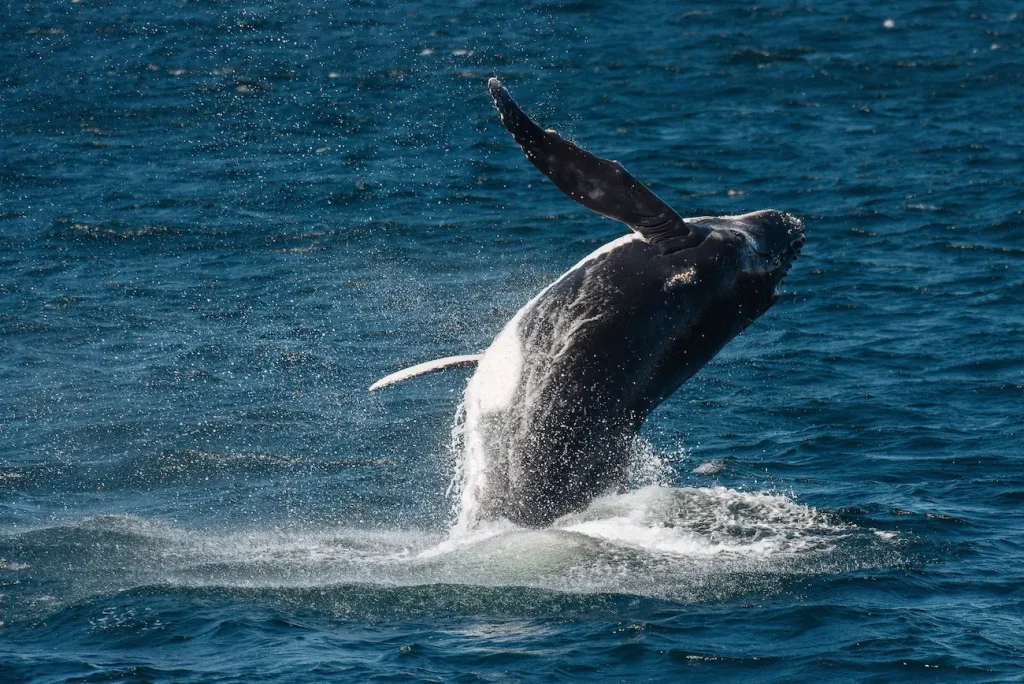
The migration happens in three phases.
✔️ Northbound (mid-May to July) — humpbacks head from Antarctica up to the warmer breeding waters off Queensland, and numbers passing Sydney build steadily through this stretch.
✔️ August — the earliest whales start heading back south, often mixed in with high-energy young males putting on a show.
✔️ Southbound (September to early November) — the main return journey, with mothers and new calves moving slower and closer to shore.
Peak activity is late June through July. If seeing a calf is the priority, the southbound run in September and October tends to be better.
More than 40,000 humpback whales make the round trip each year along the NSW coast, and Sydney sits right on the route.
For a broader look at timing across the whole east coast, I’ve got a separate guide on the best and worst months for whale watching in Australia.
The Best Boat Tours for Whale Watching in Sydney
There isn’t one “best” operator — it depends on what kind of morning on the water you actually want.
🛥️ Cruises From Circular Quay
Captain Cook Cruises is Sydney’s longest-running operator and runs a 2.5-hour catamaran cruise with both indoor and outdoor decks and a marine naturalist on board.
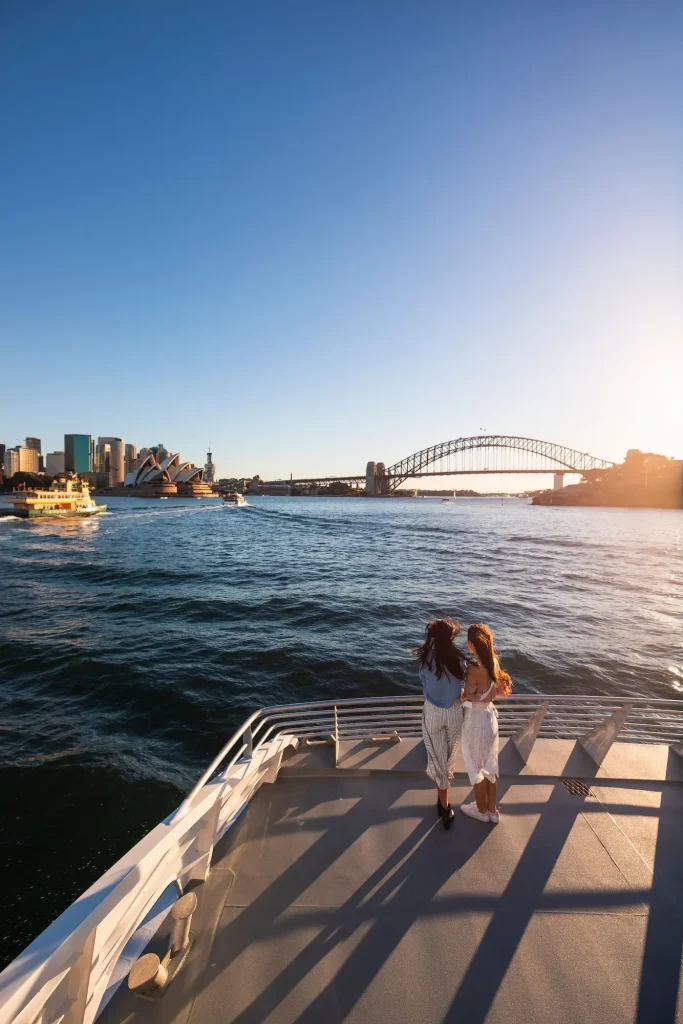
The stable decks and indoor cabin make it a comfortable pick for young families, with no risk of a speedboat spray catching a toddler off guard.
Past passengers often mention the onboard naturalist’s commentary as a highlight, with live insights into behaviour like breaching and spy-hopping rather than just pointing whales out.
Captain Cook Cruises states a 95%+ sighting success rate across the season, with a free return cruise in the same season if you don’t spot one.
The 9.30 am sailing runs daily through the season, departing from Circular Quay Wharf 6.
A second 1.30 pm sailing runs on weekends and through school holidays, plus selected weekdays otherwise, so check availability if you’re set on an afternoon slot
There’s also a combined version that pairs the cruise with a stop at Taronga Zoo, which works well if you’re travelling with kids and want to turn the morning into a full day out.
Oz Whale Watching (Sydney Princess Cruises) goes longer again, running a four-hour cruise from the Eastern Pontoon with a choice of a barbecue lunch or a hot breakfast on board.
It’s a good pick if you want the day to feel like an outing rather than just a tour.
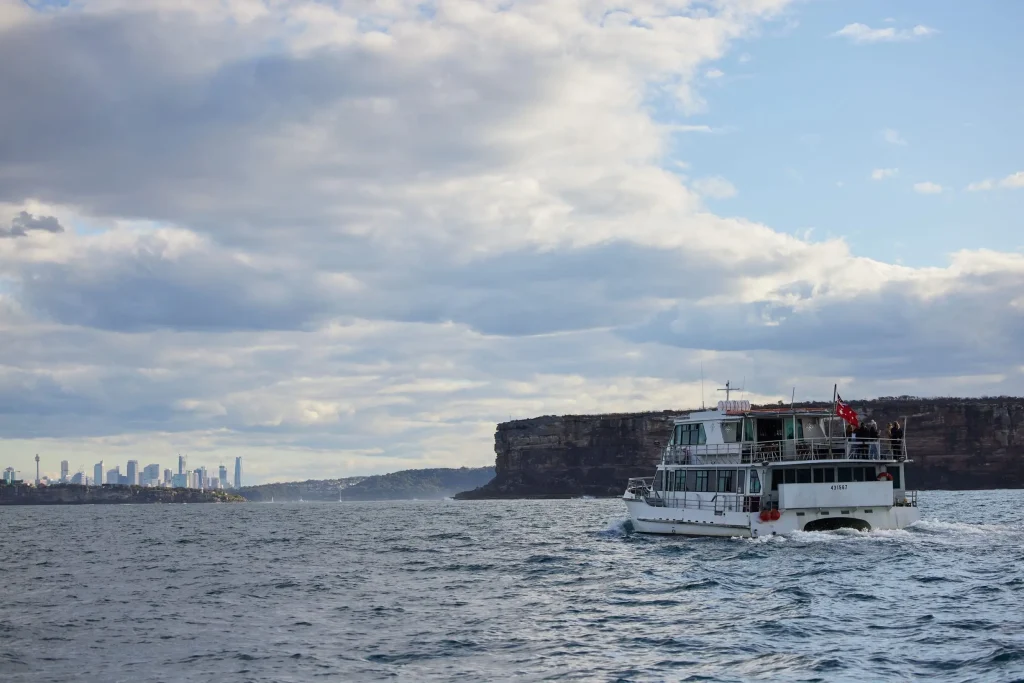
🛥️ High-Speed Options
If your idea of a good time is less “cup of tea on the deck” and more “hold onto the rail,” Ocean Extreme is worth a look.
It runs open-air rigid inflatable boats — among the fastest commercial vessels operating on the harbour — departing daily from both Campbell’s Cove at Circular Quay and Manly Wharf.
Circular Quay departures run about two hours, Manly ones closer to 90 minutes, since the whales are closer to shore from that side.
It’s a proper thrill-ride as much as a wildlife tour, so it suits older kids and adults more than very young children — spray jackets are provided, but check the minimum age when you book.
🛥️ Darling Harbour Departures
Go Whale Watching Sydney runs three-hour cruises from King Street Wharves 6 and 7 at Darling Harbour on catamarans with 360-degree outdoor viewing, plus sunset whale watching cruises on weekends.
Family-owned and running since 2004.
Sydney Whale Whisperer also departs King Street Wharf 6, aboard Port Venture, an 18.5-metre, five-level custom catamaran with wide decks and full wheelchair access.
It has a smaller-feeling operation than the big-name cruises, with cruises running roughly 2 to 3 hours depending on how far out the whales are that day.
Fantasea Cruising (which trades under the Whale Watching Sydney brand) runs three different whale watching products.
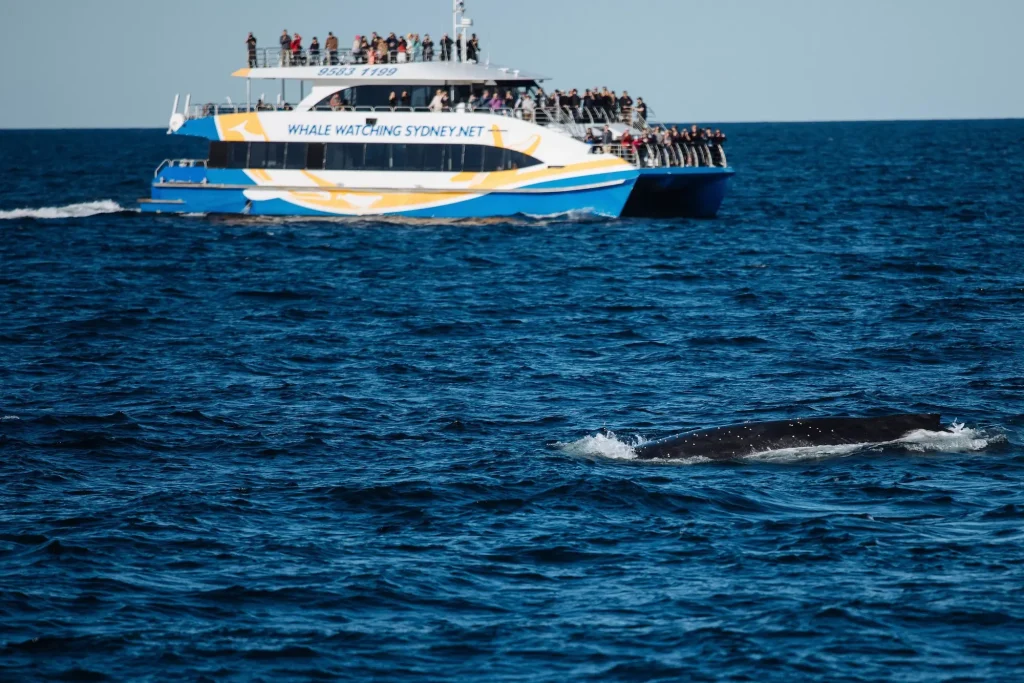
There’s a 2-hour Express cruise from Circular Quay, a 2.5-hour Discovery cruise from Darling Harbour aboard the Fantasea Avalon, and a faster 2.5-hour Adventure cruise from Darling Harbour aboard Totally Wild for anyone who wants more thrill with their whale watching.
🛥️ Sailing and Something Different
If you want a genuinely different kind of morning, Sydney Tall Ships runs a whale watching cruise aboard the Coral Trekker, a square-rigged tall ship, departing Campbell’s Cove in The Rocks.
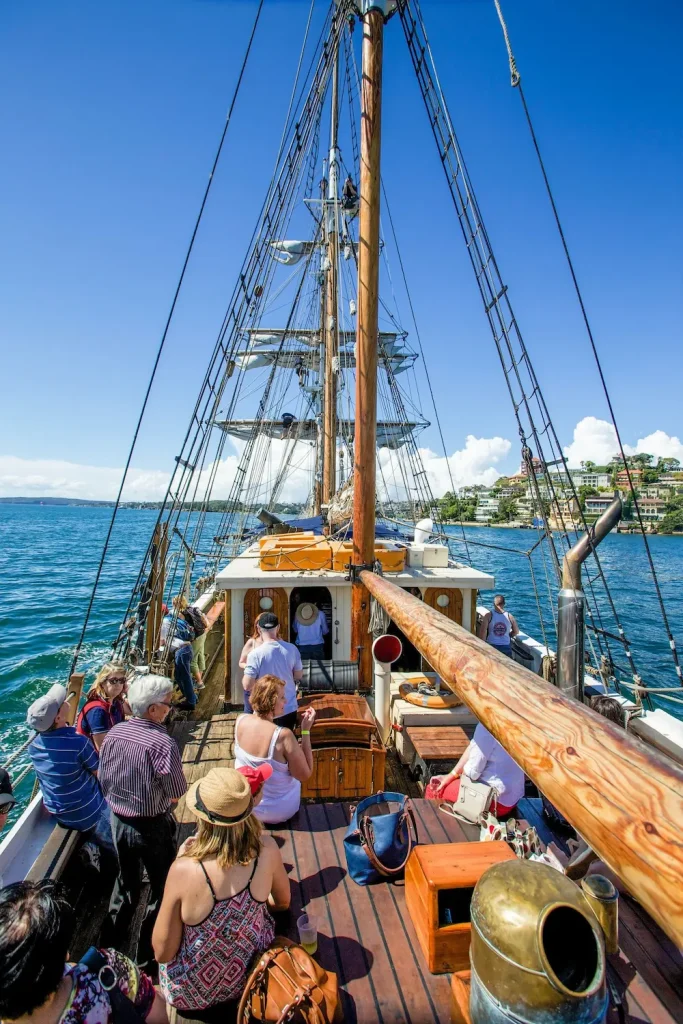
It’s a longer outing at around five hours all up, with lunch included and the option to climb the mast for a proper lookout spot.
It motors out to open water and sails when conditions allow, so it’s calmer and quieter than the speed-focused options — one of the more memorable ways to spend a day on Sydney Harbour whether or not you’re there specifically for the whales.
🛥️ Further South at Cronulla
If you’re staying in the Sutherland Shire or would rather skip the trip into the city, Cronulla Whale Watching departs Cronulla Public Wharf on a purpose-built 55-foot vessel, with humpbacks often tracking closer to shore around Port Hacking than they do further north.
It’s a smaller, more personal outing than the big harbour cruises, with the same kind of free-return sighting guarantee if you strike a quiet day.
Past passengers consistently rate it highly for the closer, calmer feel of a smaller boat, and it’s worth the trip south if you’d rather skip the Circular Quay crowds altogether.
How Long Should Your Cruise Actually Be
This is the bit most guides skip over. A two-hour cruise from Circular Quay isn’t two hours of whale watching — roughly 40 minutes each way is just getting out of the harbour and back.
That leaves under an hour actually out where the whales are.
If seeing whales is the whole point of your day, a 2.5 to 4-hour cruise gives you meaningfully more time in open water than the shorter, cheaper options.
If you’re mainly after a scenic harbour trip with whales as a bonus, the shorter cruises are fine.
A tip that comes up again and again from people who’ve done a few of these trips — the quietest window on the water sits around midday, in the gap between the big operators’ morning and afternoon sailings, when there are fewer boats jostling for position around each whale.
Free Places to Watch Whales From Land in Sydney
You don’t need a boat ticket at all. Sydney has some genuinely good land-based whale watching, and it costs nothing, which makes it an easy call if you’re travelling solo or keeping the day free of charge.
🐋 Cape Solander, in Kamay Botany Bay National Park at Kurnell, has an upgraded viewing platform where whales have been spotted as close as 200 metres from the cliffs.
NPWS is partway through infrastructure works around Kurnell through 2025-2026 that affect parking in the area, so check the park’s local alerts page before you drive out. There are no toilets on site; the nearest are 2km away.
🐋 North Head in Manly has the easy, wheelchair-accessible Fairfax Walk — Yiningma Lookout, further along the track, is the one that actually faces the open ocean and cliffs, while Burragula Lookout closer to the start looks back over the harbour to the city.
🐋 The Gap at Watsons Bay gives you a dramatic clifftop view right where whales pass close to the harbour entrance, and Woollahra Council has installed free public binoculars nearby at Jacobs Ladder in Gap Park and at Christison Park.
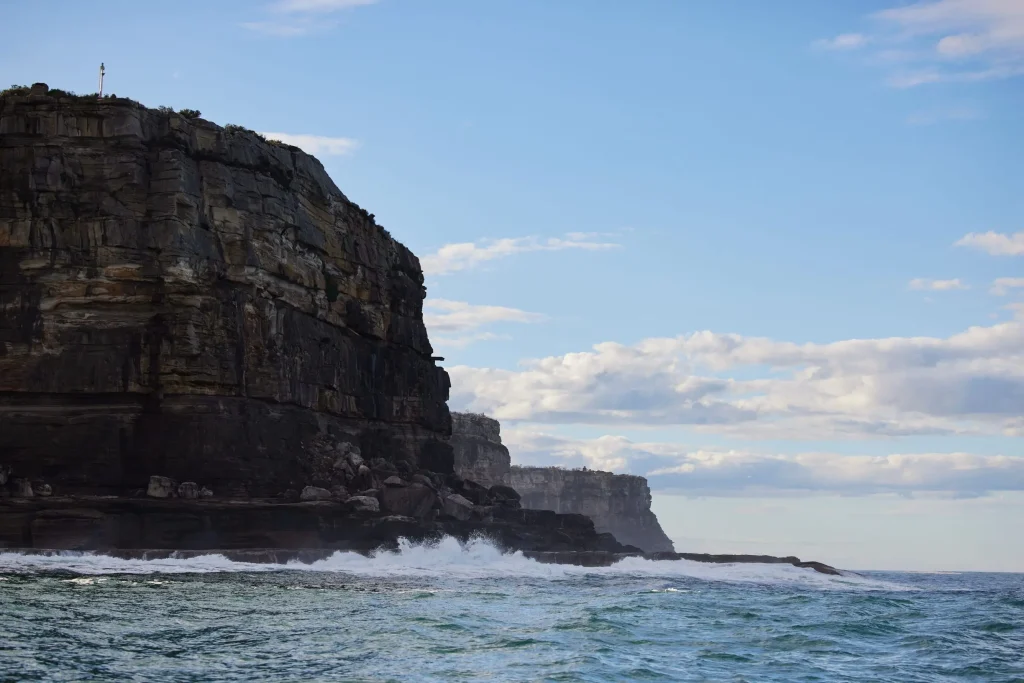
🐋 Cape Banks and Henry Head, on the La Perouse side of Kamay Botany Bay National Park, look out over the same stretch of water as Cape Solander, with no entry fee at all on that side of the bay.
🐋 Doughboy Head, further along the coastal track south of Cape Solander toward Cronulla, looks out over the same open water. The $8 charge at Kurnell is a vehicle fee, not a walk-in fee, so approaching on foot from the Cronulla end skips it entirely.
🐋 Malabar Headland National Park is another free, walk-in option in the eastern suburbs, with clifftop trails a short walk from Malabar and Maroubra.
🐋 Bondi to Coogee Coastal Walk lets you combine a beach day with whale spotting — take it slow along the cliffs between Bondi and Bronte for the best chance.
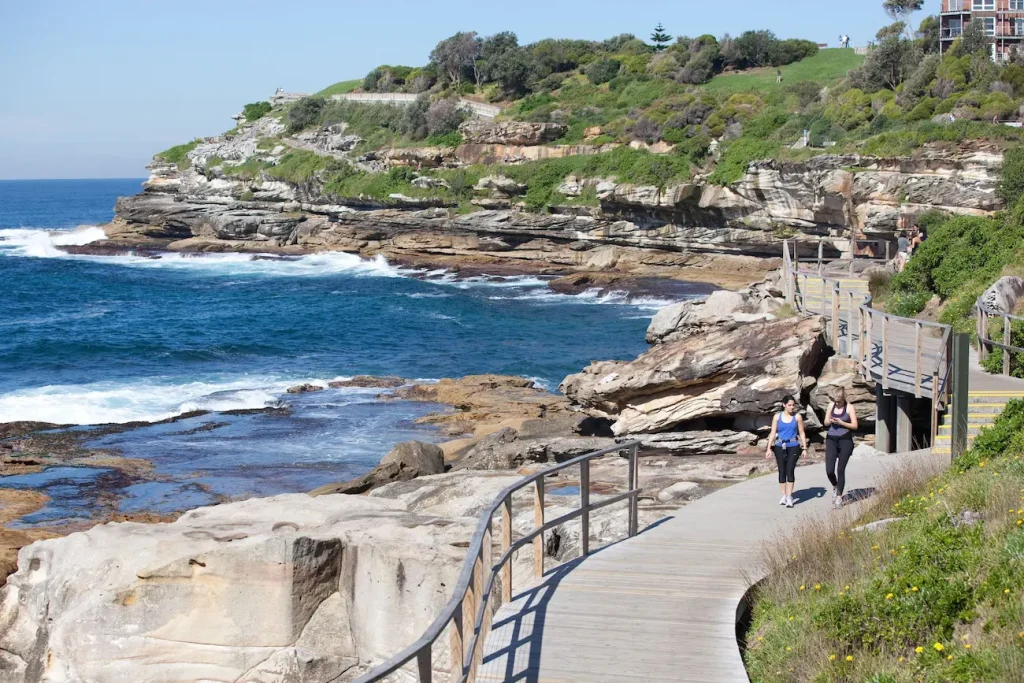
🐋 Barrenjoey Head at Palm Beach, up on the northern end of the peninsula, is quieter than the eastern suburbs spots and worth the drive if you’re already up that way.
Bring binoculars if you’ve got them. Whales are visible to the naked eye, but binoculars turn a distant splash into an actual sighting.
Early morning tends to have calmer water and better visibility, which makes it easier to spot a blow or a fin from the cliffs.
What You Might See on a Sydney Whale Watching Tour
Humpback whales make up the vast majority of sightings, and they’re the showy ones — breaching, tail slapping, the full performance.
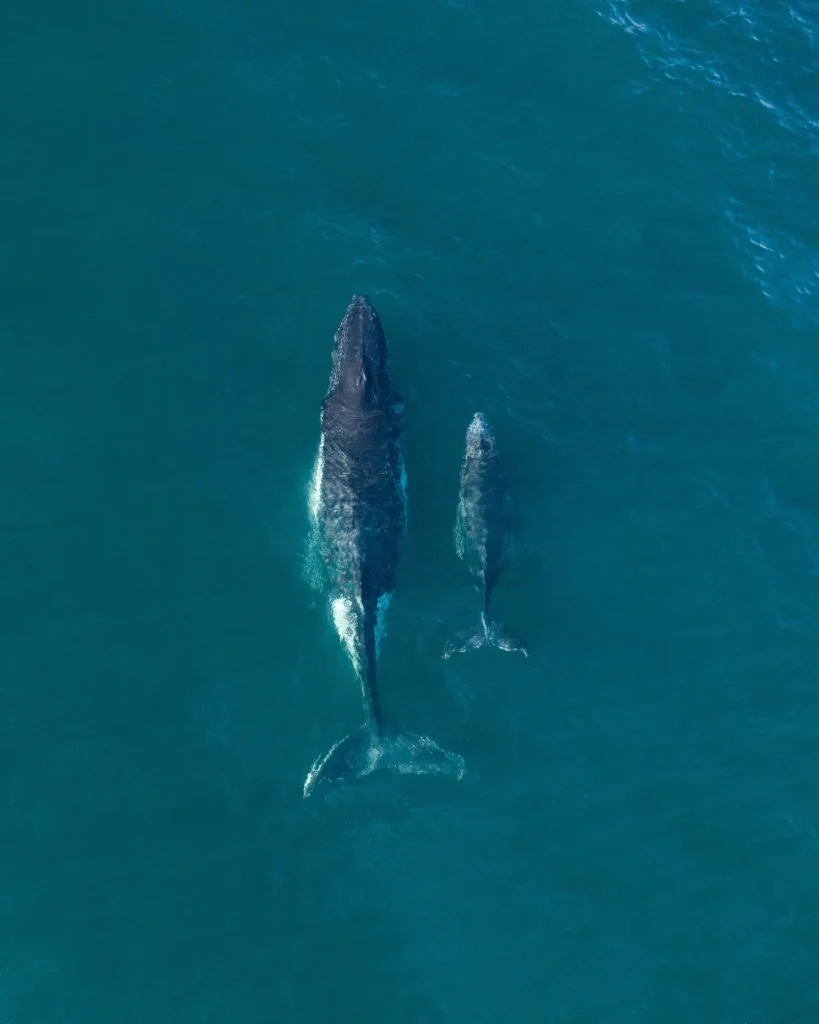
Photo Credit: Destination NSW
Southern right whales turn up less often but are easier to identify close up thanks to the white patches on their heads.
Occasional minke and blue whale sightings happen too, though they’re far less predictable. Most operators will also point out dolphins, seals and seabirds along the way, so it’s rarely just a whale-or-nothing outing even in a quieter year.
If you want to follow the migration beyond your own trip, Sydney wildlife scientist Dr Vanessa Pirotta (@drvanessapirotta) posts regular whale updates through her Wild Sydney Harbour project, and ORRCA runs a free public Whale Census Day each winter where anyone can help count whales passing the coast.
The Rules Every Boat Has to Follow Around Whales
NSW has legally enforced approach distances, and it’s worth knowing them so you understand why your boat might hang back even when whales are close.
- Powerboats and sailboats must stay at least 100 metres from whales, or 300 metres if calves are present.
- Personal watercraft need to stay 300 metres back.
- Boats have to travel at a slow, steady speed within 300 metres of a whale and approach at an angle rather than head-on.
- No more than two vessels are meant to approach the same whale at once.
Reputable operators build all of this into how they run their tours, so a “close encounter” on a cruise still means the whale came to the boat, not the other way around. Full details are on the NSW Government’s marine mammal watching page.
Getting to Sydney’s Whale Watching Departure Points
Circular Quay and Darling Harbour are both a short walk from Sydney’s main train and ferry network, so you don’t need a car for most cruise departures.
Manly Wharf departures (for Ocean Extreme) are reached by ferry from Circular Quay, which takes about 18 minutes and doubles as a scenic harbour cruise in itself.
Cronulla Whale Watching’s wharf is a short walk from Cronulla station, at the end of the Sutherland train line, so that one doesn’t need a car either.
For the land-based spots, Cape Solander and North Head are easier by car — there’s parking at both, though Cape Solander’s car park fills up fast on peak migration weekends, so aim to arrive before 9am if you’re going on a Saturday or Sunday in June or July.
Public transport reaches North Head via bus from Manly Wharf, but Cape Solander at Kurnell is trickier without a car — a rideshare from Cronulla station is the easiest workaround.
Cape Banks and Henry Head at La Perouse are easier without a car — the L94 or 394 bus runs there from Circular Quay, Martin Place or Hyde Park.
Malabar Headland is reachable the same way on the 396 or 397 bus to Maroubra, and Doughboy Head is simply an extension of the coastal track from Cronulla station, the same starting point as Cronulla Whale Watching’s wharf.
Nearby Things to Do Around a Whale Watching Trip
A whale watching morning pairs well with the rest of a Sydney day. If you’re building out a longer visit, my 7-day Sydney itinerary has suggestions for filling the afternoon around a harbour cruise.
Short on time and want to squeeze whale watching into a bigger day trip loop, my guide to day trips from Sydney covers a few coastal options worth combining with a Kurnell or Manly visit.
If you’re keeping costs down, free things to do in Sydney is worth a look too, since a land-based whale watching morning barely costs a thing.
For a broader look at the state beyond Sydney, the New South Wales hub page has more regional guides.
Know Before You Go
✅ Sighting guarantees are common but read the fine print. Most operators offer a free return trip (not a refund) if you don’t see a whale, and this only kicks in during peak season when sightings are near-certain anyway.
✅ Book ahead in June and July. These are the busiest weeks of the season and popular departures sell out, especially weekend morning slots.
✅ Layer up. Sydney Harbour is exposed and cooler on the water than it looks from shore, even on what feels like a mild winter day.
✅ Take seasickness seriously if you’re prone to it. Morning departures tend to have calmer water, and the bigger catamarans handle swell better than the small rigid inflatables.
✅ A few extra tips seasoned Sydney whale watchers swear by. Check the swell forecast before you book, take proper anti-seasickness medication rather than relying on ginger tablets alone (read the packet; some need dosing an hour or two before boarding), skip a heavy meal beforehand, and sit toward the back of the boat with a clear view of the horizon.
✅ The land-based lookouts are genuinely free and genuinely good. Don’t assume you need to pay for a cruise to see whales in Sydney — on a clear day with a bit of patience, Cape Solander or North Head can deliver just as memorable a sighting.
